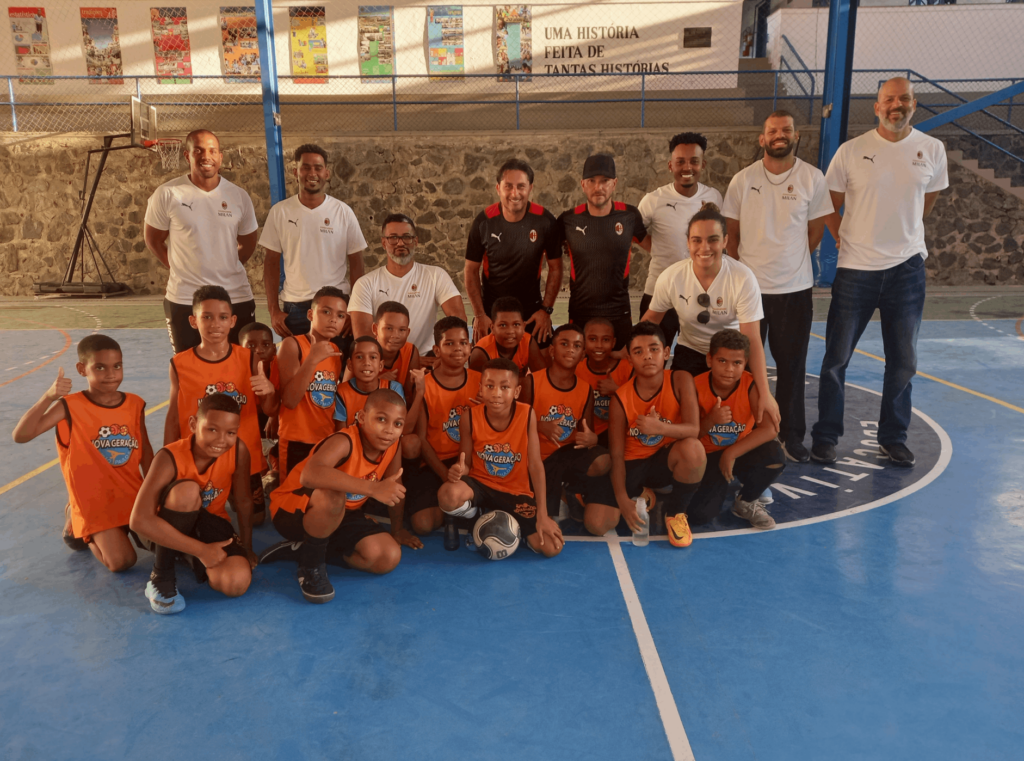
From July 27 to August 3, 2022, two AC Milan coaches, in collaboration with Fondazione Milan, traveled to Salvador de Bahia, Brazil, to deliver a week of technical training and activities for the coaches of two Fondazione Milan partner organizations: Centro Educativo João Paulo II and Fundação Betânia.
Since the early 2000s, both organizations have been operating in the outskirts of Bahia’s capital with the aim of providing a safe and educational environment for local children and adolescents, who are often exposed to the risks of street life due to the lack of parental support and extracurricular opportunities in their neighborhoods. In both centers, sport represents the main factor of social inclusion and community building for young people, who take part in a variety of activities such as futsal, basketball, handball, karate, and dance.
The objective of the visit by the two coaches, Fabio and Giuseppe, was to deliver an intensive week-long training program for the coaches of both organizations, introducing new techniques related to the sports practiced while maintaining a strong focus on interpersonal skills and values-based education. Fondazione Milan’s mission is, in fact, to promote the educational and social values of sport, which can provide everyone—especially young people—with opportunities for personal growth and social empowerment in highly challenging environments.
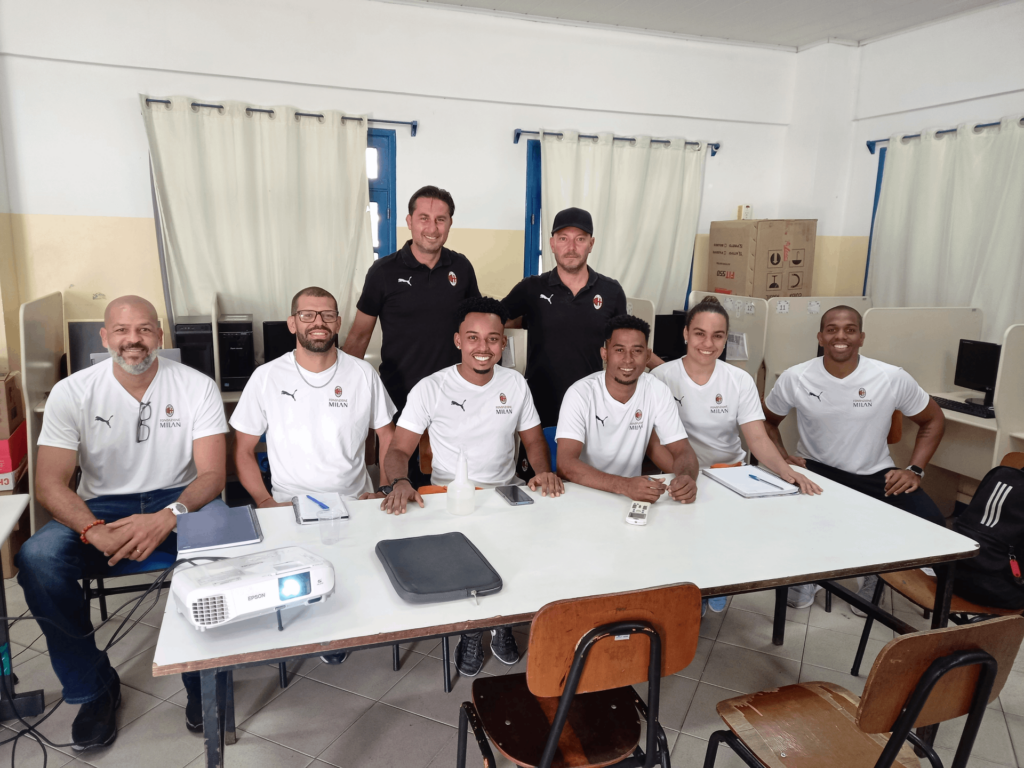
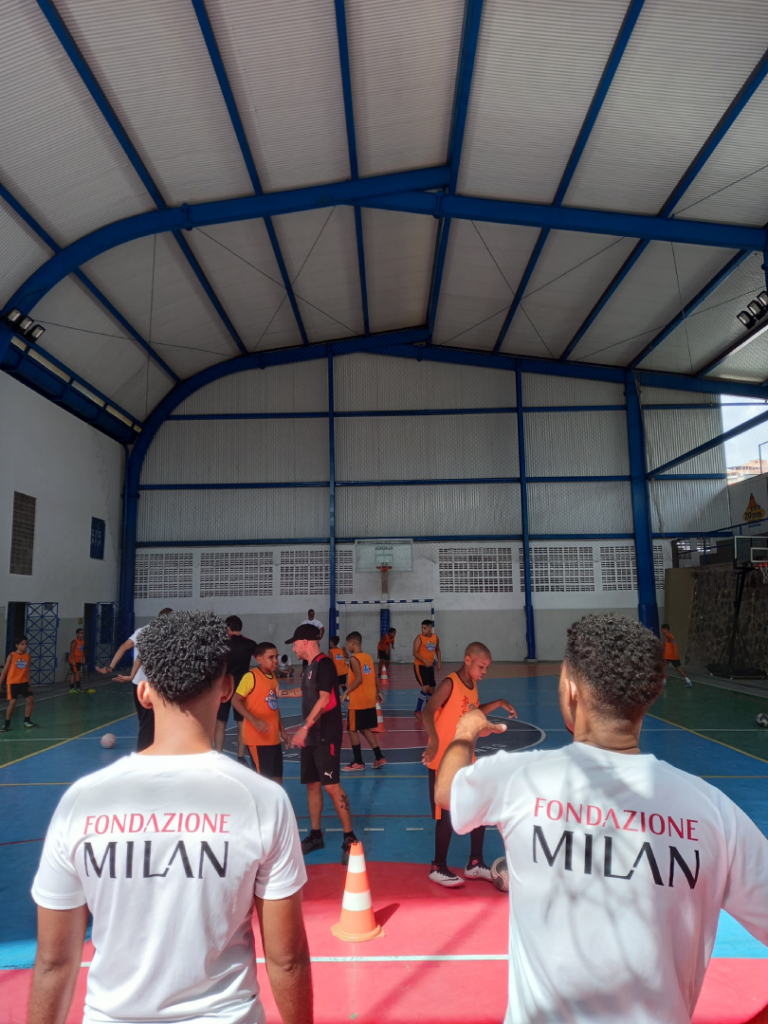
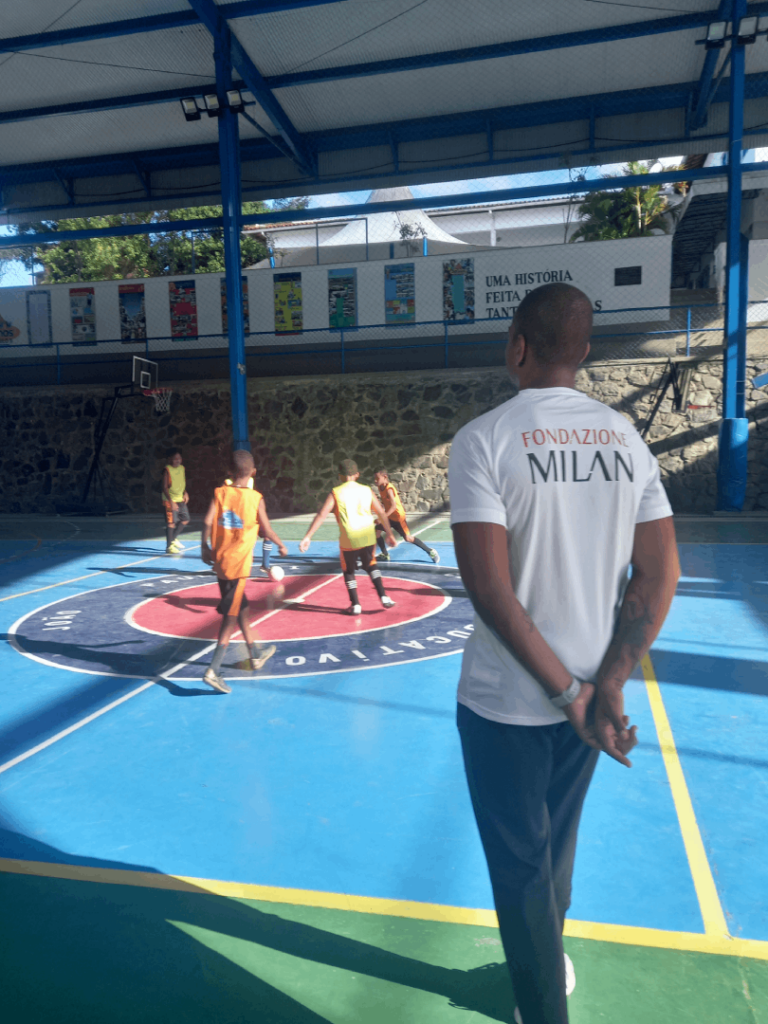
The AC Milan coaches conducted classroom training sessions for the ten coaches working with the partner organizations, as well as on-field activities involving boys and girls aged 6 to 12 who attend the sports programs at the two centers on a daily basis. This approach made it possible to immediately apply the concepts learned during the classroom sessions, which covered a wide range of topics: from football fundamentals and game principles to organizational aspects such as training planning and communication between coaches and players, as well as broader social issues including gender equality in sport and the role of sport as an educational and inclusive tool.
Alongside the activities planned as part of the initiative, the coaches also had the opportunity to gain a deeper understanding of life in Brazil’s underserved communities, which are often characterized by high rates of child mortality and malnutrition, inadequate infrastructure, and a lack of schools and recreational spaces for children. At the same time, adult unemployment, alcohol abuse, and drug addiction are widespread challenges, compounded by frequent episodes of violence within the neighborhoods.
According to the testimonies of the two coaches and the representatives of the partner organizations, the training experience proved to be mutually enriching. It provided an opportunity to learn about a reality very different from the Italian context, broadening their cultural perspectives. Both coaches emphasized that their interaction with the young participants went beyond conventional training, allowing them to spend time learning about the children’s stories, aspirations, and dreams, while dedicating attention and care to each of the 60 children and young people involved.
There were also many moments of fun, sharing, and activities beyond sport, including visits to Salvador and several local communities.
This represented a first educational mission of its kind for Fondazione Milan—an experience the Foundation hopes to replicate in other parts of the world in order to strengthen relationships with its partner organizations and further promote the values of sport.